admin
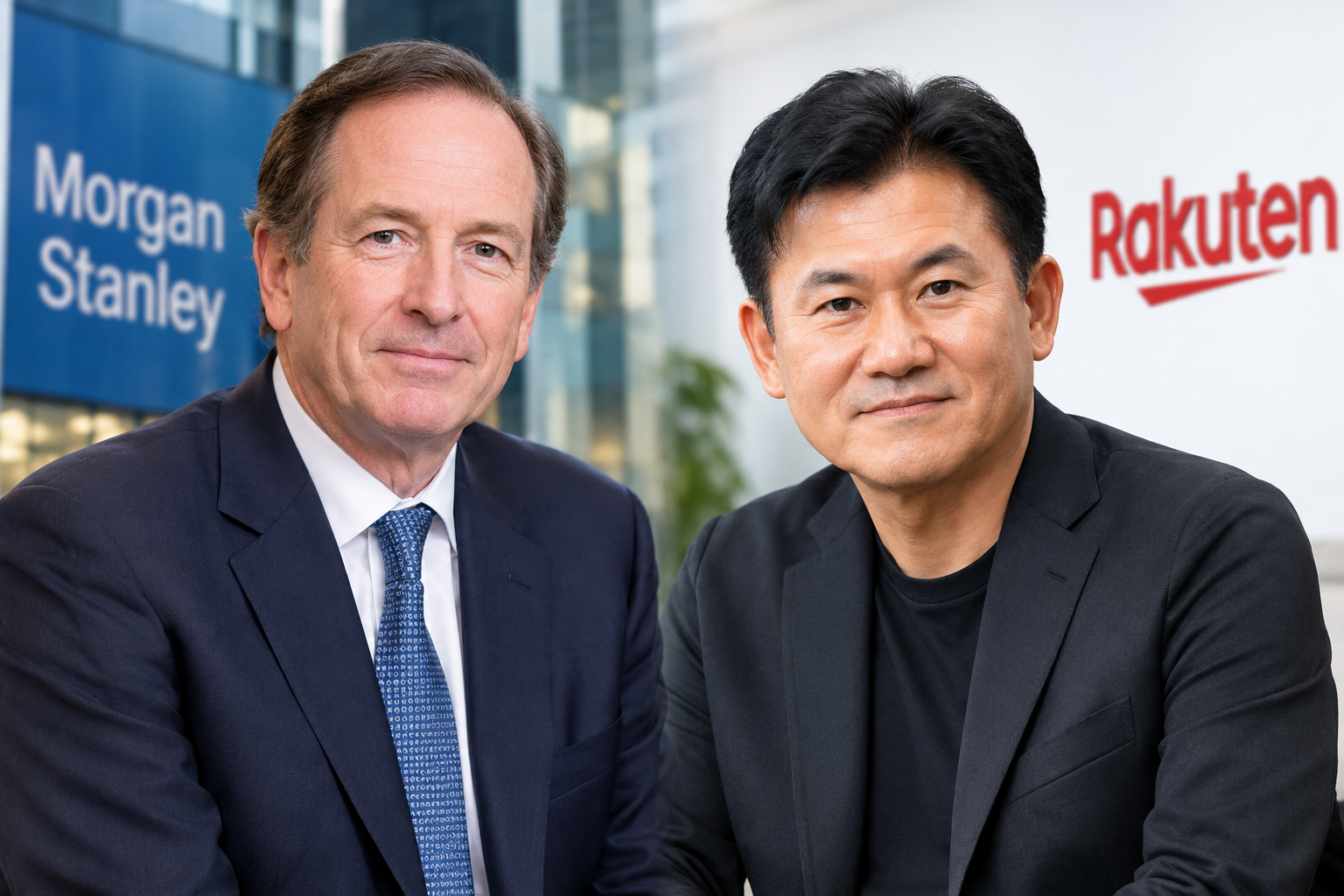
Few business leaders have reshaped their industries as thoroughly as these two. One spent over a decade steering a Wall Street giant through crisis and reinvention. The other built a Japanese online marketplace into a sprawling digital ecosystem spanning e-commerce, banking, payments, and mobile networks. This guide to James Gorman and Hiroshi Mikitani covers their backgrounds, their strategies, and what their careers teach about leadership, acquisitions, and long-term vision.
A note on scope: there is no widely documented formal partnership between the two men. They are best understood as parallel figures, one representing global finance and the other the Asian digital economy, whose careers offer revealing contrasts.
Who Is James Gorman?
James Gorman was born in Australia in 1958 and studied law and commerce at the University of Melbourne before earning an MBA at Columbia Business School. He began his career at McKinsey & Company, then moved to Merrill Lynch, where he rose to lead its wealth management business.
In 2006 he joined Morgan Stanley as head of its wealth management division. In 2010 he became CEO, taking over in the aftermath of the global financial crisis, when the firm’s reputation and strategy were both under strain.
The Gorman Strategy at Morgan Stanley
Gorman’s core idea was to reduce reliance on volatile trading revenue and build steadier, fee-based income. Under his leadership, Morgan Stanley:
- Expanded wealth management into the firm’s central engine, buying out the Smith Barney joint venture in stages.
- Acquired E*Trade in 2020 for roughly $13 billion, adding millions of retail clients and workplace stock-plan accounts.
- Bought Eaton Vance in 2021 for around $7 billion, deepening its investment management capabilities.
- Strengthened risk controls and capital discipline, which helped restore investor confidence.
By the time he handed the CEO role to Ted Pick in early 2024, Morgan Stanley was widely seen as a very different institution from the one he inherited: more stable, more diversified, and more profitable. Gorman stayed on as executive chairman. In 2025 he also took on the role of chairman at The Walt Disney Company, where he was tasked with overseeing a high-profile CEO succession process.
Who Is Hiroshi Mikitani?
Hiroshi Mikitani was born in Kobe, Japan, in 1965. He graduated from Hitotsubashi University and began his career at the Industrial Bank of Japan, later earning an MBA from Harvard Business School. He has often said that the 1995 Kobe earthquake, which devastated his hometown, pushed him to leave banking and pursue entrepreneurship, convinced that life is too short and unpredictable to postpone ambition.
In 1997 he founded the company that would become Rakuten, launching the Rakuten Ichiba online marketplace with a small team and a handful of merchants. His approach differed from Amazon’s: instead of selling goods directly, Rakuten empowered small and mid-sized merchants to build their own storefronts and customer relationships.
The Rakuten Ecosystem
Mikitani’s defining strategic idea is the “Rakuten Ecosystem”: a network of services connected by a single membership and loyalty-points system, so a customer who shops, banks, trades, and uses their phone within the group generates value across every touchpoint. Key pieces include:
- Rakuten Ichiba, the flagship marketplace.
- Rakuten Card, Bank, and Securities, forming a large fintech arm.
- Rakuten Mobile, launched as Japan’s fourth major carrier, an enormously expensive but strategically bold bet on a cloud-native network.
- International acquisitions, including Kobo (e-books), Viber (messaging), and Ebates, which became Rakuten Rewards.
Mikitani is also known for his “Englishnization” policy, which made English the company’s internal language to prepare Rakuten for global competition. He owns the Rakuten Eagles baseball team and the soccer club Vissel Kobe, using sports as a branding and community tool.
James Gorman and Hiroshi Mikitani: A Side-by-Side Comparison
Placing the two leaders next to each other highlights how different paths can lead to similar kinds of influence.
Industry origins. Gorman is a product of consulting and traditional finance, working inside very large, established institutions. Mikitani is a founder who built his company from scratch in an emerging field.
Role in their companies. Gorman was a professional manager who inherited and transformed a legacy franchise. Mikitani is a founder-CEO who has shaped every phase of Rakuten’s evolution and remains its public face.
Approach to growth. Both are serial acquirers, but with different logic. Gorman bought scale and stability, favoring businesses that produce predictable fees. Mikitani bought capabilities and customer bases to feed his ecosystem, accepting heavier risk and, in the case of Rakuten Mobile, years of significant losses.
Risk tolerance. Gorman’s signature move was reducing earnings volatility. Mikitani’s was embracing it for the sake of long-term platform building. Neither is inherently right; each fit the situation and the era.
Retail investing overlap. Interestingly, both men built major retail brokerage and wealth operations. Gorman’s E*Trade acquisition and Mikitani’s Rakuten Securities both reflect a belief that everyday investors, served digitally, are a durable growth market.
Lessons from James Gorman and Hiroshi Mikitani
Whether you are a student of business, an aspiring executive, or an investor, several lessons stand out from the careers of James Gorman and Hiroshi Mikitani.
1. Strategy Beats Reaction
Gorman did not chase every trend after the financial crisis. He chose a clear direction, wealth management, and committed to it for more than a decade. Mikitani likewise held to his ecosystem thesis through skeptics and setbacks.
2. Acquisitions Need an Integration Thesis
Both leaders bought companies with a purpose beyond headline growth. Gorman’s deals added clients and assets that fit a fee-based model. Mikitani’s deals were meant to strengthen cross-selling within a loyalty network. Deals without that kind of logic tend to disappoint.
3. Culture Is a Strategic Tool
Mikitani’s English-language mandate was disruptive, but it was a deliberate cultural lever tied to global ambition. Gorman, for his part, was known for emphasizing professionalism and reputation after a period when the industry’s image was badly damaged. Culture, in both cases, was treated as part of strategy rather than decoration.
4. Bold Bets Carry Real Costs
Rakuten Mobile shows the downside of ambition: heavy capital spending, sustained losses, and pressure on group finances. It also shows the upside potential of challenging entrenched incumbents. Leaders who admire Mikitani’s boldness should also study the balance sheet consequences.
5. Succession and Legacy Matter
Gorman’s planned handover to Ted Pick, followed by his move into a board leadership role at Disney, illustrates orderly succession planning. Mikitani, as a founder, still faces the longer-term question of how Rakuten’s vision outlives its creator.
What Their Stories Mean for Investors and Professionals
For investors, the two companies offer different risk profiles. Morgan Stanley under Gorman became a case study in earnings quality and capital return. Rakuten remains a higher-variance story, tied to the success of its mobile business and the broader strength of its ecosystem. This is general context rather than financial advice, and anyone making investment decisions should consult current filings and a licensed advisor.
For professionals, the takeaway is that leadership comes in more than one form. You can rise through institutions and reshape them from within, as Gorman did, or build something new and carry it through multiple cycles, as Mikitani has.
Final Thoughts
The careers of Gorman and Mikitani show that vision, discipline, and willingness to make big decisions matter more than any single formula. One brought stability to a financial powerhouse and moved on to guide another iconic company. The other keeps pushing a founder’s ambition across commerce, finance, and telecommunications. This overview of James Gorman and Hiroshi Mikitani should give you a clear foundation for understanding both men, and a useful lens for evaluating leadership in any industry.
Details about current roles and company performance can change quickly, so check recent news and official company sources before relying on specifics. I can also turn this into a Word document or add an FAQ section if you’d like.
READ ALSO: https://techbigwrite.com