admin
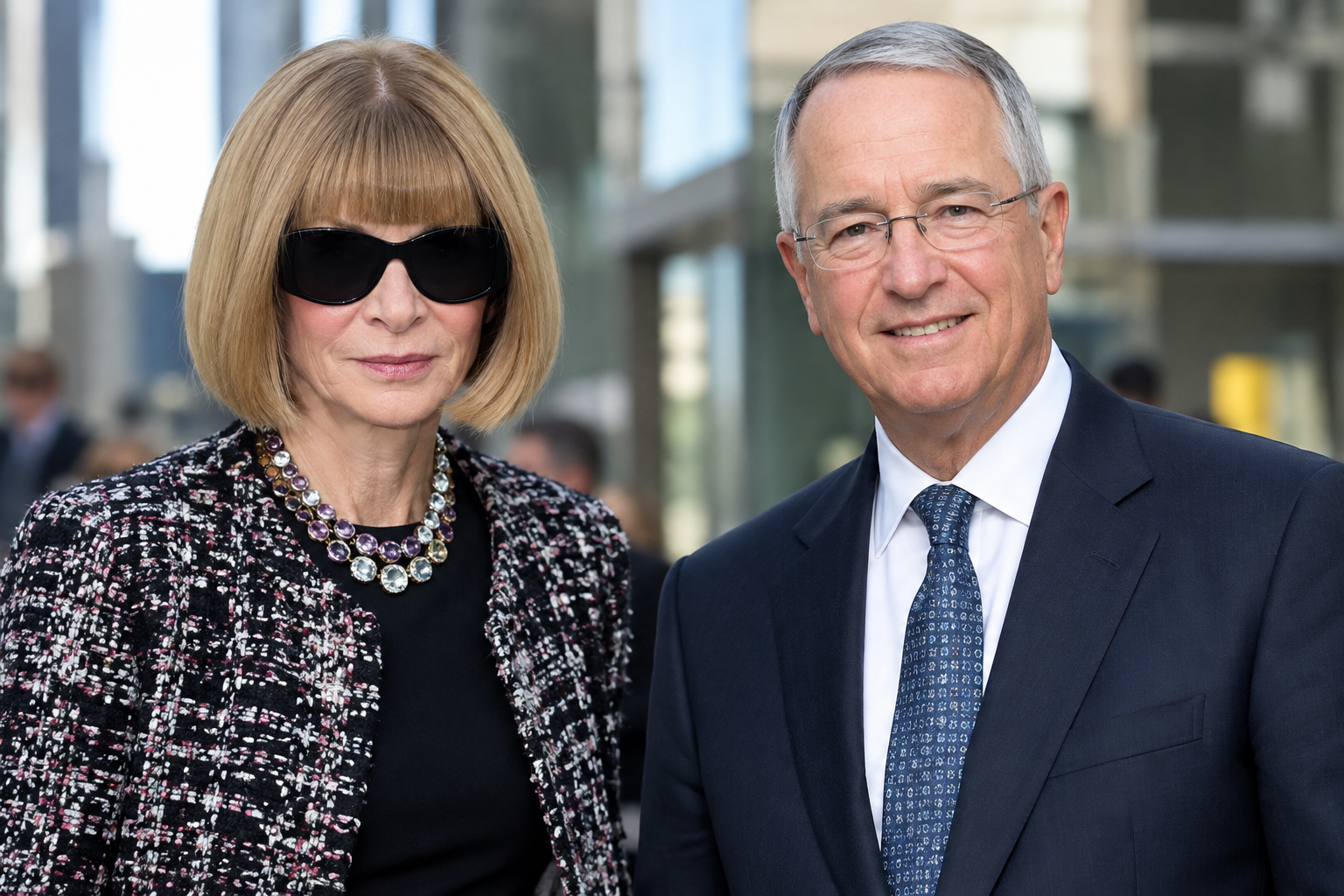
When people search for “anna wintour and ricardo salinas,” they’re often surprised to learn there’s no business partnership, feud, or personal relationship between the two. Anna Wintour is the legendary former editor-in-chief of Vogue and current global chief content officer at Condé Nast. Ricardo Salinas Pliego is a Mexican billionaire who founded Grupo Salinas. What actually links these two very different public figures is a shared narrative that keeps surfacing in business and career commentary: both built extraordinary careers without leaning on traditional academic credentials the way most people assume they need. This guide brings the two stories together — not because Anna Wintour and Ricardo Salinas ever crossed paths professionally, but because their parallel journeys offer a genuinely useful lesson about what actually drives long-term success.
Who Is Anna Wintour?
Anna Wintour was born in London in 1949, the daughter of Charles Wintour, a prominent newspaper editor who shaped much of her early thinking about media and audience. She didn’t follow the conventional university route that dominates the fashion and publishing world today. Instead, she started working in a boutique at 15, took a handful of fashion courses after finishing school, and quickly concluded that fashion instinct couldn’t be taught in a classroom — you either understood it intuitively or you didn’t.
From there, she worked her way through magazines like Harpers & Queen and Oz before crossing the Atlantic to work at New York magazine and House & Garden. She eventually returned to Britain to edit British Vogue, then came back to the U.S. to take the helm of American Vogue in 1988 — a position she held for nearly four decades until she moved into a broader creative leadership role at Condé Nast. Along the way, she turned the Met Gala into fashion’s most-watched global event and earned a reputation as the single most influential figure in fashion publishing.
Who Is Ricardo Salinas Pliego?
Ricardo Salinas Pliego was born in Mexico City in 1955 into a family already embedded in business — his father, Hugo Salinas Price, ran a chain of stores that would later become Elektra. Salinas did pursue formal education, earning an accounting degree from Tecnológico de Monterrey and an MBA from Tulane University. But he’s become known publicly for downplaying the value of prolonged academic study relative to hands-on experience, famously telling young entrepreneurs that stacking degrees doesn’t make someone better at business — going out and actually doing things does.
He joined Elektra in 1981, experimented with several smaller ventures through the mid-1980s, and took over the family business from his father in 1987. From that foundation, he built Grupo Salinas into a sprawling conglomerate spanning telecommunications, media, banking, and retail, including TV Azteca, one of Mexico’s largest media companies. Today he ranks among the wealthiest people in Latin America and speaks out often in support of libertarian economic ideas.
The Real Connection: Skepticism Toward Traditional Credentials
Searches pairing “anna wintour and ricardo salinas” trace back to op-eds and business commentary pieces that use both figures as examples in the ongoing debate over whether formal education is truly necessary for success. These pieces cite both, side by side, as proof that raw ambition, hands-on learning, and industry-specific instinct can outweigh years spent in lecture halls.
It’s worth noting the nuance here: Wintour stepped away from formal fashion education early and learned almost entirely on the job. Salinas, by contrast, completed a full degree and an MBA — his public position leans less toward “skip school entirely” and more toward “don’t assume credentials alone make you competent.” Lumping the two together as though they had identical paths oversimplifies both stories, but the commentary correctly identifies a shared thread: neither built their reputation primarily on academic pedigree.
What You Can Actually Learn From Comparing Them
1. Domain expertise beats generic credentials. Wintour developed her eye for trends and Salinas sharpened his instinct for scaling businesses through years of direct immersion in their industries, not classroom theory.
2. Starting early matters. Wintour worked in fashion retail at 15. Salinas experimented with businesses in his twenties before he formally took the reins at Elektra.
3. Confidence in a niche skill can substitute for broad credentials — but doesn’t guarantee success everywhere. Both built empires in industries (fashion publishing, Latin American retail and media) where relationships, timing, and instinct mattered enormously. That’s a specific competitive context, not proof that skipping formal training works universally.
4. Family and industry proximity gave both a head start. Wintour’s father edited a major newspaper; Salinas inherited a functioning retail business from his father. Their stories inspire people, but neither built from zero external advantage — a detail people often leave out when they invoke these names as motivational shorthand.
Frequently Asked Questions
Do Anna Wintour and Ricardo Salinas know each other or have a business relationship?
No public record documents a personal or professional relationship between them. They operate in entirely different industries and geographies.
Why do people search “anna wintour and ricardo salinas” together?
Almost exclusively because articles and social posts use both as parallel examples in discussions about success without traditional academic paths — not because of any actual interaction between them.
Did either of them skip college entirely?
Wintour never completed a university degree; she learned fashion primarily through direct industry work. Salinas completed both an undergraduate degree and an MBA, despite publicly questioning the value of extended academic study for entrepreneurs.
Final Thoughts
Anna Wintour and Ricardo Salinas represent two of the most recognizable names in their respective fields — global fashion publishing and Latin American business — and their stories get paired together not because of any real-world connection, but because commentators frequently cite both in the broader conversation about credentials versus experience. Understood accurately, their combined lesson isn’t “skip school.” Instead, it shows that deep, hands-on immersion in an industry, paired with ambition and (in both cases) a fair amount of early access and opportunity, can matter just as much as — or more than — a diploma.