admin

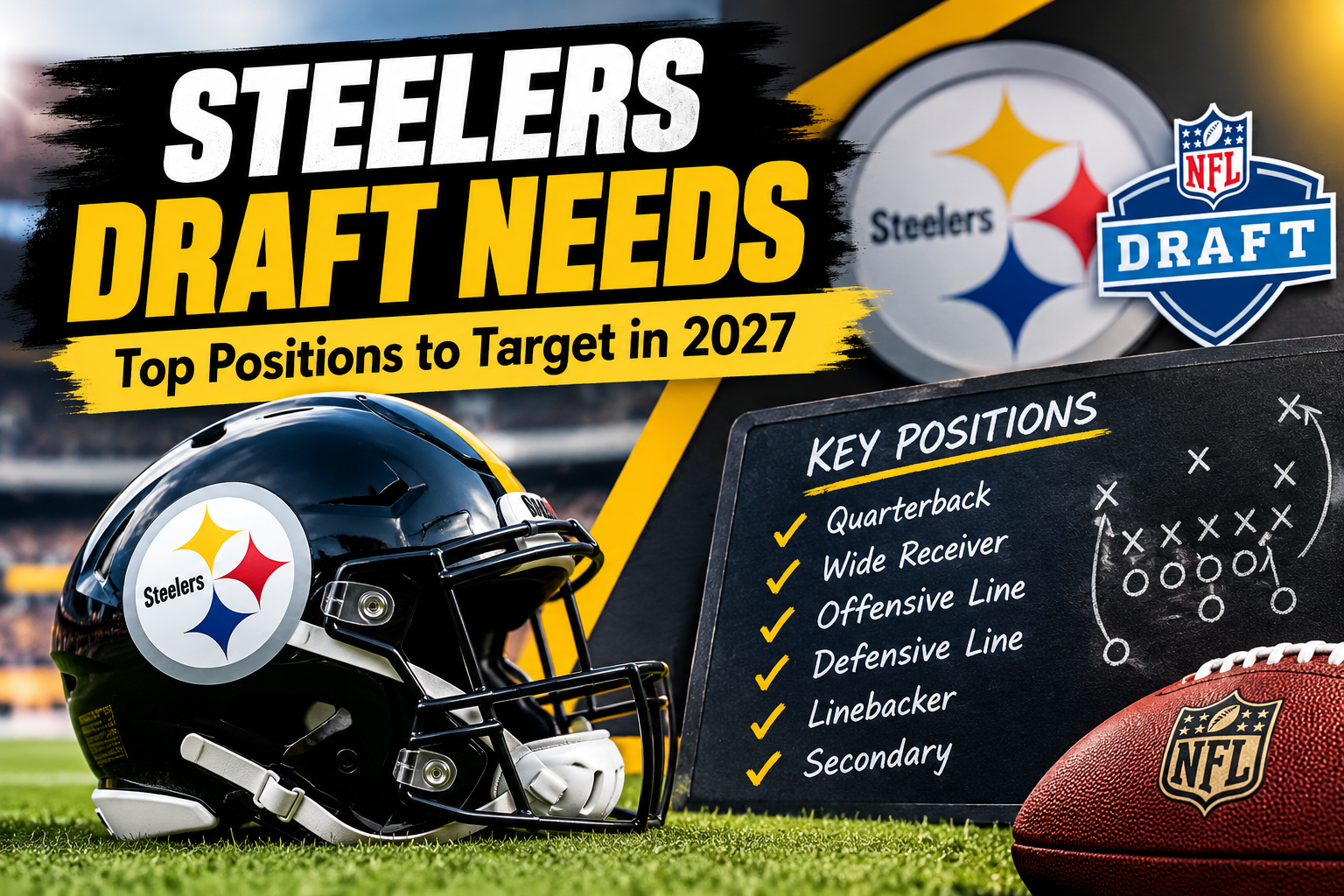
With the 2026 season in full swing, the front office is already looking ahead to April. Omar Khan and Andy Weidl will spend the coming months deciding where to invest premium capital. If you’re trying to understand the Pittsburgh Steelers’ draft needs, five positions stand out, and one of them looms over everything else.
1. Quarterback: The Long-Term Question
Quarterback is the biggest storyline. With a stacked QB class and no Aaron Rodgers returning, that should be priority one, according to one analyst’s read of the situation. The 2027 class is widely projected to be deep, which gives Pittsburgh options that rarely line up this well.
Part of the appeal is timing. A team that isn’t forced to start a rookie right away can let him learn and develop instead of expecting him to be great immediately. The Steelers have also tried the veteran-bridge approach several times in recent years. A young, high-upside passer, whether drafted early or reached through a trade up, would give them a clear direction for the first time in a while.
Pittsburgh can’t force this, though. Where they pick depends on how the season goes, and a deep quarterback class means other teams will be hunting too. If the Steelers want their guy, they may have to be aggressive.
2. Edge Rusher: A Decision With Real Money Attached
The Steelers have long been strong at edge rusher, but that room is heading toward a financial crossroads. One analyst has framed the question as which edge rusher the team keeps next year between TJ Watt and Alex Highsmith after Nick Herbig’s contract.
That matters for the draft. If the team ends up moving on from a veteran or letting someone walk, a replacement has to come from somewhere. Drafting an edge rusher a year early is a smart way to avoid a cliff. Even if Watt remains the centerpiece, he’s at an age where planning for the future is sensible rather than pessimistic.
Look for athletic, high-motor pass rushers who can contribute on special teams as rookies and grow into larger roles. Pittsburgh has historically valued that profile.
3. Safety and Slot Cornerback: Rebuilding the Back End
Draft analysts have repeatedly named the secondary as an area to watch. One recent breakdown listed safety, slot cornerback, linebacker and defensive tackle as positions the Steelers’ scouts should be monitoring during the college football season.
Safety deserves special attention. Modern defenses need versatile players who can cover tight ends, rotate down into the box, and finish games by preventing explosive plays. An earlier offseason assessment argued the team needs an impact player on the back end who can seal close games. That need doesn’t disappear just because the calendar turned.
Slot cornerback is the other piece. Offenses now spend most of their snaps in three-receiver sets, so the nickel corner is effectively a starter. A quick, tough defender who can match up inside would improve the defense in a way fans may not notice until it’s gone.
4. Linebacker and Defensive Tackle: Fixing the Run Defense
The Steelers’ defensive line looks strong on paper, but run defense has struggled to live up to that talent. One commentator noted one of the best defensive line rooms in the NFL, yet run defense has struggled to match the talent. Free-agent additions may help, but the draft is where you find long-term answers.
Linebacker is a classic Pittsburgh position. The franchise built its identity on physical, instinctive players in the middle of the defense, and a modern version of that player, someone who tackles well and can still handle coverage, would be a valuable get. A strong interior presence at defensive tackle would also give the front seven more flexibility and take pressure off the edge rushers.
These aren’t glamorous picks, but they’re often where good teams separate themselves. A Day 2 investment at either spot could pay off quickly.
5. Offensive Line: The Perennial Priority
Few positions come up more often in discussions of the Pittsburgh Steelers’ draft needs than the offensive line. Earlier in the year, one analyst argued that providing a sturdy front for whichever quarterback is at the helm had to be among the top priorities, and suggested focusing on the interior while taking a swing on a developmental left tackle.
That advice still holds. Whoever the quarterback is, whether a veteran or a rookie, he’ll only be as good as the protection in front of him. A young quarterback in particular needs a clean pocket and a reliable run game to build confidence. Pairing a first-round quarterback with an improved line would be the most efficient way to speed up his development.
Offensive linemen also tend to be safer investments than many other positions. Even if a pick needs a year to develop, he can slot in as a starter for years afterward.
Honorable Mention: Wide Receiver Depth
The wide receiver room looks improved after offseason additions, but depth remains a talking point. One analysis noted the team needs another veteran WR to round out the room in case of injury. That’s more of a depth concern than a crisis, and the Steelers can address it later in the draft or on the veteran market rather than spend a high pick.
How the Steelers Might Approach the Draft
Pittsburgh has typically valued best-player-available drafting, with an eye toward positional needs when talent is close. That approach fits this year well. The Steelers have several areas where they could stand to get better, which means they don’t have to reach.
A sensible blueprint might look like this:
- Round 1: Take the highest-impact player on the board, with quarterback leading the list if a franchise-caliber passer is available.
- Rounds 2–3: Target the trenches or the secondary, where quality starters are often found.
- Rounds 4–7: Add depth at wide receiver, linebacker, and special-teams contributors.
Of course, plans change. Injuries, trade-deadline moves, and the results of the final games will reshape the board. The Steelers’ draft position will also depend heavily on how the remainder of 2026 unfolds.
Final Thoughts
Quarterback may dominate the headlines, but a complete look at the Pittsburgh Steelers’ draft needs shows a roster with several important decisions ahead: an edge-rusher succession plan, a younger and more versatile secondary, a tougher interior defense, and continued investment in the offensive line.
If Khan and Weidl address even three or four of these areas well, the Steelers could enter 2027 with a more balanced and sustainable roster. For fans, that makes the months between now and April a good time to start paying attention to college football.
READ ALSO: https://techbigwrite.com