admin
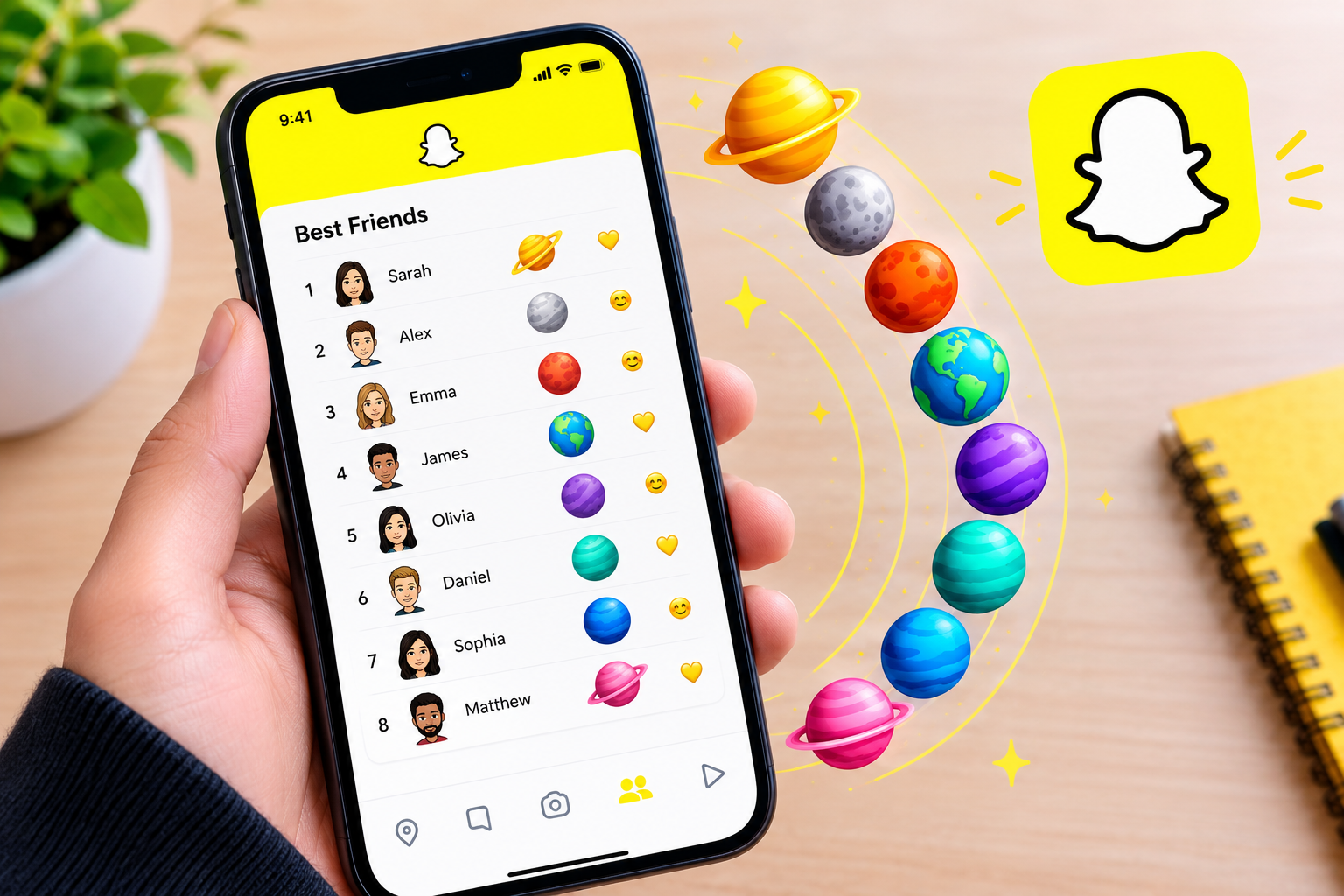
If you’ve opened a friend’s profile on Snapchat and spotted a tiny planet next to their name, you’ve met one of the app’s most talked-about features. The Friend Solar System turns a plain ranking into something visual and a bit playful. This guide explains how the best friends list planets snapchat feature works, what each planet means, and how to see where you land.
What Are Snapchat Planets?
Snapchat has always ranked the people you talk to most, a system known as the Best Friends list. For years, that ranking was mostly hidden or shown as emoji. Snapchat Planets, also called the Friend Solar System, presents the same idea differently. You are the Sun, and your closest friends orbit you as planets.
The system covers eight friends, matching the eight planets of our real solar system. The closer a planet sits to the Sun, the closer that person is to you based on how you interact. It’s a small piece of gamification, but it has become a popular talking point because it shows people where they stand with each other.
The feature is part of the Snapchat+ subscription, so not everyone can see it. You generally only see solar system rankings for friends who have also subscribed and left the feature switched on.
The Snapchat Planets Order
The planets follow the same sequence as the real solar system, starting nearest the Sun:
- Mercury is your number one closest friend.
- Venus is your second closest friend.
- Earth is your third closest friend.
- Mars is your fourth closest friend.
- Jupiter is your fifth closest friend.
- Saturn is your sixth closest friend.
- Uranus is your seventh closest friend.
- Neptune is your eighth closest friend.
The order is easy to remember if you know the real planets. Mercury is at the top, and Neptune is at the edge of your orbit. Anyone outside the top eight doesn’t get a planet at all.
Each planet also has its own look. Earth is the easiest to spot because the moon orbits it, while Mars has a reddish tone with floating hearts around it. Friends in the top positions are shown with happier, more enthusiastic Bitmoji expressions.
How Snapchat Decides Who Gets Which Planet
Snapchat doesn’t publish its exact formula, but the ranking is driven by how much you interact with someone. Snaps, chats, and other back-and-forth activity all play a role. Sending more messages and media to one person than to the others on your list is the most reliable way to move them up.
Two points matter here. First, the ranking is dynamic. It rises and falls with your activity, so someone who is Mercury today can slide to Mars next week if you stop talking, then climb back later. Second, the ranking is about your behavior, not about how much you like someone. A close friend you see in person every day might sit at Saturn because you rarely message them, while a coworker you chat with constantly might land on Venus.
How to Check Your Place in Someone’s Solar System
To see where you stand, you’ll need the Snapchat+ feature enabled on your account. The general steps are:
- Open Snapchat and go to a friend’s profile.
- Tap the badge under their username. It will say either “Best Friends” or “Friends.”
- Look for the Solar System or Friend Solar System option.
- Snapchat will show which planet you are in that friend’s solar system.
The badge itself tells you something useful. If it says “Best Friends,” you are in each other’s top eight. If it says “Friends,” you are in their top eight, but they aren’t in yours.
Be careful about screenshots. Taking a screenshot on a friend’s profile, even of the solar system graphic, may notify them. If you want to keep your curiosity private, avoid capturing it.
Understanding the Best Friends and Friends Badges
The best friends list planets snapchat system applies only to your closest connections, so the badges are an important part of reading it correctly. A “Best Friends” badge means the relationship is mutual, which many users treat as a sign of a solid connection. A “Friends” badge points to a one-sided ranking, where one person talks to the other more than the reverse.
That one-sidedness is where most of the drama comes from. People often feel hurt to discover they are Neptune in someone’s orbit when that person is Mercury in theirs. It helps to remember that the number reflects messaging habits, not the strength of the friendship.
How to Climb Toward Mercury
If you want to move up in a friend’s solar system, the strategy is simple: be consistent. A few practical habits help:
- Message regularly. Short, frequent exchanges count more than one long conversation followed by silence.
- Send snaps, not only chats. Mixing photos, videos, and text gives Snapchat more activity to measure.
- Reply promptly. Active back-and-forth keeps a conversation near the top of the list.
- Keep it genuine. Spamming someone with empty snaps might raise your numbers, but it rarely improves the friendship.
Remember that the person you’re trying to impress is also adjusting their own habits. If they spread their messages across many people, no single friend will stay at Mercury for long.
Can You Hide Your Solar System?
Yes. Snapchat+ users can choose whether to display their Friend Solar System. If you’d rather keep your rankings private, you can turn the feature off in the settings. Many people do this to avoid awkward questions or comparisons, and it’s a reasonable choice if the ranking causes more stress than fun.
If a friend’s planet seems to have vanished, that may simply mean they hid their solar system, left the subscription, or stopped talking to you enough to drop out of the top eight.
Why Snapchat Planets Became So Popular
The feature taps into something people already care about: knowing where they stand with others. A numbered list can feel cold, but a solar system feels light and shareable. Friends compare planets, joke about who is Mercury, and use the rankings as conversation starters. Questions like “How did I move from Mars to Earth?” turn a technical feature into a social ritual.
For Snapchat, it also encourages more activity. When people want to maintain or improve their position, they send more snaps and chats, which keeps the app at the center of their daily routine.
Tips for Taking Planets Less Seriously
It’s easy to read too much into a tiny icon. Here are a few ways to keep perspective:
- Treat the ranking as a snapshot. It reflects recent activity and changes quickly.
- Don’t compare across platforms. Someone who is Neptune on Snapchat might be your closest friend on WhatsApp or in person.
- Talk to people directly. If a ranking bothers you, a quick conversation says more than any planet can.
- Use it for fun. The feature is meant to be playful, not a measure of loyalty.
Final Thoughts
The Friend Solar System is a clever twist on an old idea. By turning your Best Friends list into planets, Snapchat makes a simple ranking more visual and more social. Knowing the order from Mercury to Neptune, how the badges work, and how your activity shapes each position gives you everything you need to read it correctly.
The key takeaway is that a planet is a reflection of how you use the app, not the full story of a friendship. Understanding how the best friends list planets snapchat system works lets you enjoy the feature without letting it define your relationships. Check your orbit, have some fun with it, and keep the real conversations going.
READ ALSO: https://techbigwrite.com